 Call us: 507-494-5169
What Your TIG Weld Color Can Tell You | Understanding Weld Color & Quality
Posted by Weldfabulous - Miller Welds on Aug 10th 2026
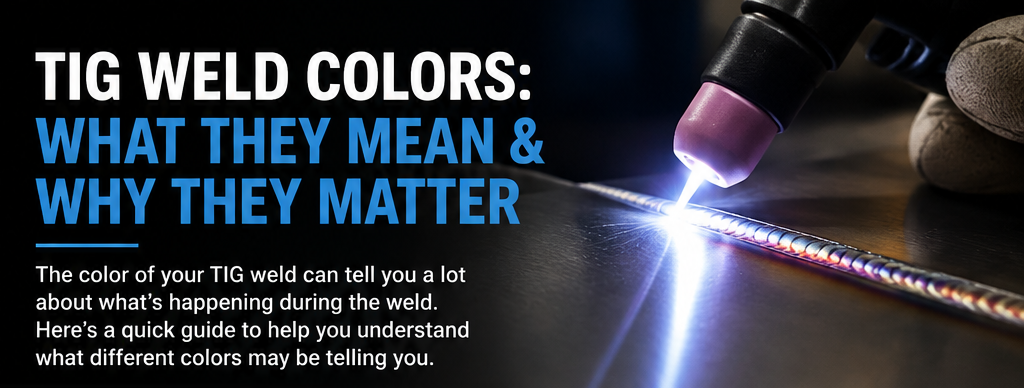
One of the unique things about TIG welding is that the finished weld often tells a story before you even inspect it closely. The colors left behind on stainless steel can provide helpful clues about heat input, shielding gas coverage, and overall welding technique.
While weld color alone doesn't determine whether a weld is good or bad, learning how to interpret these visual cues can help you make adjustments that improve consistency and weld quality.
What Causes TIG Weld Colors?
As stainless steel heats up during TIG welding, it naturally reacts with oxygen in the air. Shielding gas helps protect the weld from contamination, but factors such as heat input, travel speed, gas coverage, and material cleanliness all influence the colors that appear as the weld cools.
A small amount of discoloration is completely normal. The key is understanding when color is simply cosmetic and when it may be a sign that something needs attention.
Straw or Light Gold
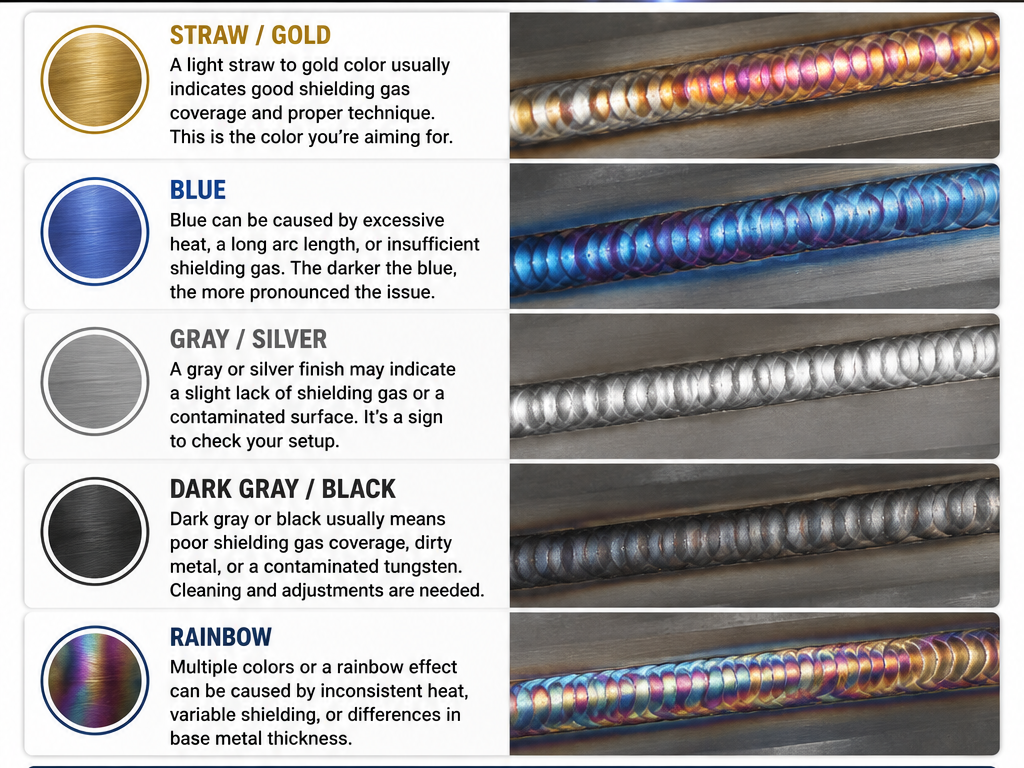
A light straw or gold color is often considered a positive sign on stainless steel. It generally indicates controlled heat input and effective shielding gas coverage, resulting in a clean, well-protected weld.
Many experienced TIG welders aim for these lighter colors whenever possible because they often reflect good welding practices.
Blue
Blue discoloration typically means the weld reached a higher temperature or remained hot longer during welding. It can also suggest that shielding gas coverage wasn't ideal.
A small amount of blue isn't always a concern, depending on the application, but darker shades may be a reason to review your settings or technique.
Silver or Gray
Silver or light gray welds may indicate that the shielding gas wasn't fully protecting the weld or that the base material wasn't completely clean before welding.
If you notice these colors consistently, it's worth checking your gas flow, torch angle, and material preparation before making additional welds.
Dark Gray or Black
Dark gray or black discoloration often signals excessive oxidation or contamination. This can happen when shielding gas coverage is interrupted, the tungsten becomes contaminated, or the material isn't properly cleaned before welding.
If your welds begin turning dark, inspect your equipment, replace worn consumables if necessary, and verify your gas settings before continuing.
Rainbow Colors
Colorful welds featuring shades of gold, purple, blue, and bronze are common in TIG welding. These colors develop as different temperatures affect the surface of the stainless steel.
Although rainbow-colored welds can look impressive, consistency is usually more important than appearance alone. Large variations in color across the weld may indicate changing heat input, inconsistent travel speed, or uneven shielding gas coverage.
Tips for Producing Cleaner TIG Welds
If you're looking for cleaner, more consistent welds, a few simple habits can make a noticeable difference:
- Clean the base material before welding.
- Keep your tungsten sharpened and free of contamination.
- Verify your shielding gas flow and check for leaks.
- Maintain a consistent travel speed and arc length.
- Avoid overheating the material.
- Replace worn consumables before they affect weld quality.
Small adjustments often lead to cleaner welds and more predictable results.
When Weld Color Matters Most
The importance of weld color depends on the application.
For decorative projects or general fabrication, slight discoloration may be acceptable if the weld is structurally sound. However, industries such as food processing, pharmaceutical manufacturing, and aerospace often have stricter standards where minimizing oxidation is critical for corrosion resistance and cleanliness.
Understanding the requirements of your project will help determine whether weld color is simply cosmetic or an indication that adjustments should be made.
Every Weld Tells a Story
Weld color is just one piece of the puzzle, but it can be a valuable source of feedback. Combined with bead appearance, penetration, and overall consistency, it helps you evaluate your technique and identify opportunities for improvement.
The more you understand what your weld is telling you, the easier it becomes to produce cleaner, stronger, and more consistent results.
Whether you're just learning TIG welding or refining years of experience, quality equipment and properly maintained consumables make a difference. Weldfabulous carries a wide selection of Miller TIG torches, filler metals, tungsten electrodes, gas lenses, cups, and replacement consumables to help you get the most from every weld.
Browse our complete selection of Miller TIG welding products and keep your setup performing at its best.